
Ephesus – Day 3
The theme today is, “Somewhere in Time.” Not like the fantasy movie with Superman and Dr. Quinn (look it up) but as a Journey to Antiquities to the real city of Ephesus. Left the Viking Saturn at 12:30PM, 50 degrees and not a cloud in the sky. Caught the tour bus for the ruins and was not disappointed. Nevin, our tour guide, a Moslem from Kusadasi, (pronounced Kush-a-dashi) Turkey, she prepared well to explain the biblical history at this place from a Christian perspective through our headsets.
Our general feel about the site was the size that the city of Ephesus was. One hour was insufficient to see everything. It is now considered by some to be the New York City of the Roman Empire. Archaeologists surmise that it will take another 200 years to uncover the rest of the city still buried. Somewhere under the silt, time has buried the past of this great city where the gospel was preached. And where Christ was building His church.
Like the last post at Corinth, what three things did, the apostle John, Paul, Timothy, Mary the mother of Jesus and a whole host of other believers see here at Ephesus that dominated this bustling city now abandoned to archaeological history.
1 – The Hall of Tyrannus
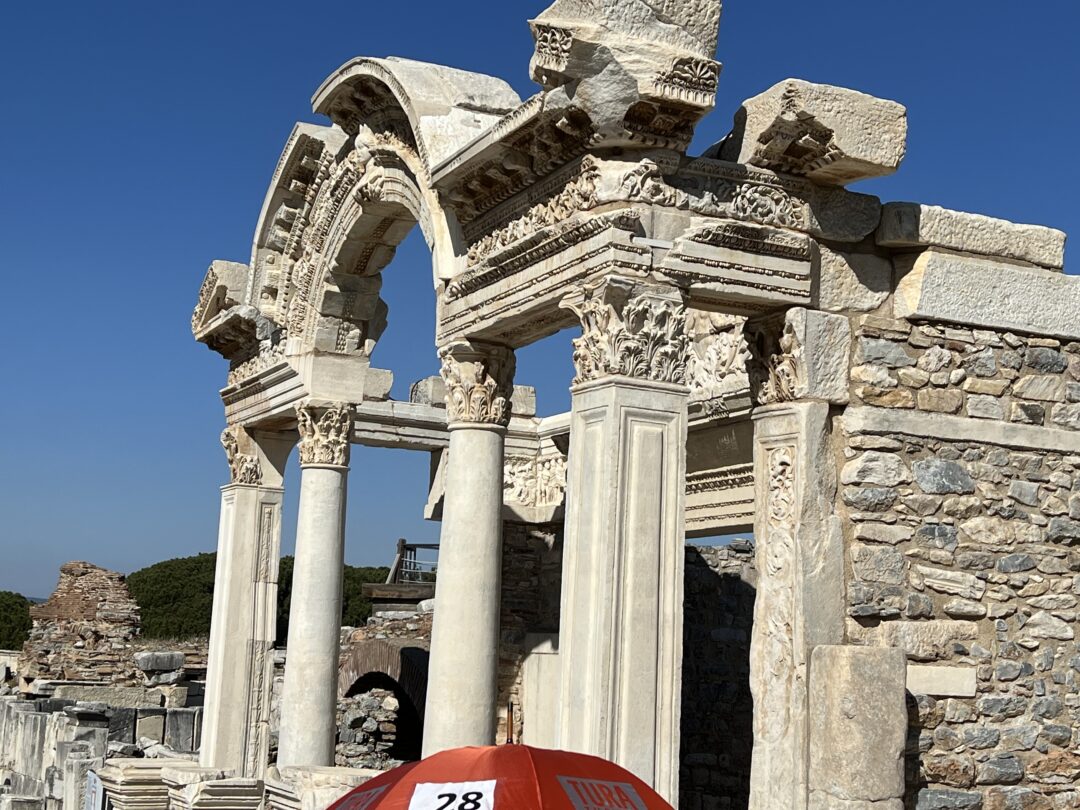
(Actually this is Hadrians Temple)
The lecture hall of Tyrannus has not yet been discovered. Only about 20% of the ancient city has been excavated. there is inscriptional evidence that Tyrannus was a name common in Ephesus at that time. Several inscriptions have been found in the city, dating from approximately 54-93 AD including one on a stone pillar.
Now which pillar of the thousands lying horizontally has that inscription? Your guess is as good as mine. Was there even a Hall of Tyrannus? Yes, I’m absolutely certain there was one with that name. Google it? No, read from the source material.
“And he entered the synagogue and for three months spoke boldly, reasoning and persuading them about the kingdom of God. But when some became stubborn and continued in unbelief, speaking evil of the Way before the congregation, he withdrew from them and took the disciples with him, reasoning daily in the hall of Tyrannus. This continued for two years, so that all the residents of Asia heard the word of the Lord, both Jews and Greeks.” Acts 19:8-10 ESV
A carving of a menorah on the step of the Celsius library provides tangible archaeological evidence of a Jewish population after the time of the Apostle Paul.
2 – The Celsus Library
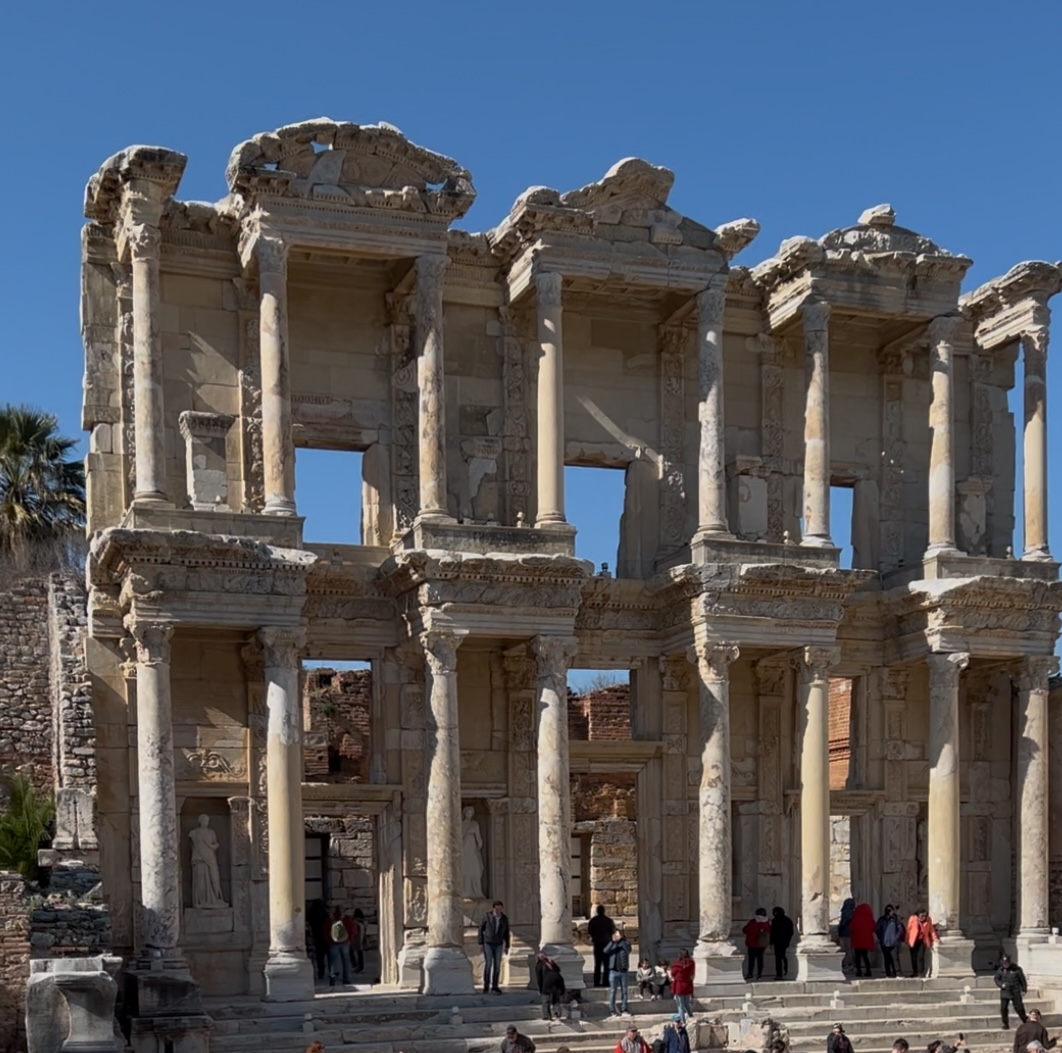
The Scriptures do not mention this library in particular however extra-biblical texts mention a man named Celsus. He was influential, highly intellectual, and someone the Apostle John disliked extremely. It was reported that John would leave the room when Celsus would come into it.
“Celsus was the author of a work titled The True Word. He writes that, “there is an ancient doctrine [archaios logos] which has existed from the beginning, which has always been maintained by the wisest nations and cities and wise men”. He leaves Jews and Moses out of those he cites (Egyptians, Syrians, Indians, Persians, Odrysians, Samothracians, Eleusinians, Hyperboreans, Galactophagoi, Druids, and Getae), and instead blames Moses for the corruption of the ancient religion.
Celsus approached Christianity from a combination of philosophical and religious perspectives. He had a Platonic understanding of God and polytheistic outlook common in Roman society. He believed in an “unknown God” who deployed a hierarchy of lesser deities or demons to manage earthly affairs. He believed worship was to be reserved for the highest God but also believed that the lesser spiritual beings demanded ritual attention. He advocated loyalty to the Roman state religion, encouraging citizens to honor the emperor and participate in civic festivities. Yet he viewed the Christian refusal to align with Roman religious life as detrimental to the unity and stability of the empire.
Christians in every era have encountered opponents to their faith. The apostolic writers encouraged believers to stand firm, guided by the Spirit-inspired Word of God. They did not promote unquestioning belief. Rather, they pointed to divine revelation confirmed by historical evidence, such as the resurrection of Jesus. The apostle Paul wrote from Corinth, “I am not ashamed of the gospel, for it is the power of God for salvation to everyone who believes” (Romans 1:16). This indicates a confident proclamation of truth rather than a call for blind acceptance.
From Rome, the apostle Peter urged Christians to be ready to defend their faith, saying, “Always being prepared to make a defense to anyone who asks you for a reason for the hope that is in you” (1 Peter 3:15). Although he addressed believers in the first century, the principle continues to guide Christians who face criticism, urging them to offer sound reasons based on Scripture and historical testimony. The Christian message was never intended for the unthinking. It invites careful examination and rational acceptance, consistent with the mention that “all Scripture is breathed out by God” (2 Timothy 3:16). The biblical writings are recognized as reliable records for discerning God’s revealed truth. (Cited from Christian Publishing House Blog. )
3 – The Theater
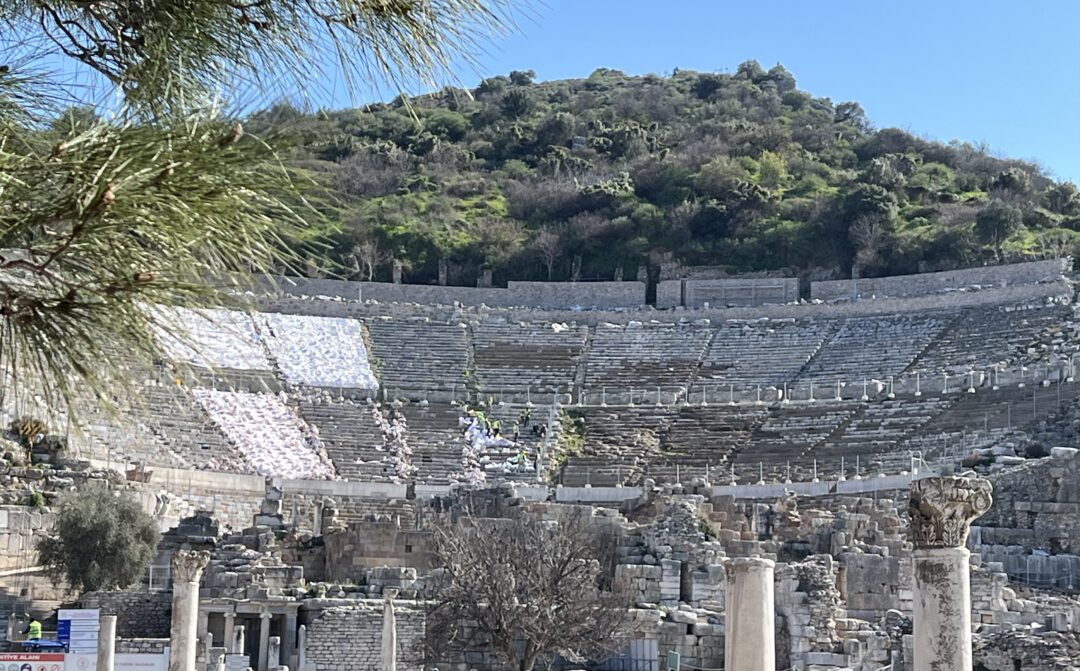
(Bottom photo From Wikipedia)
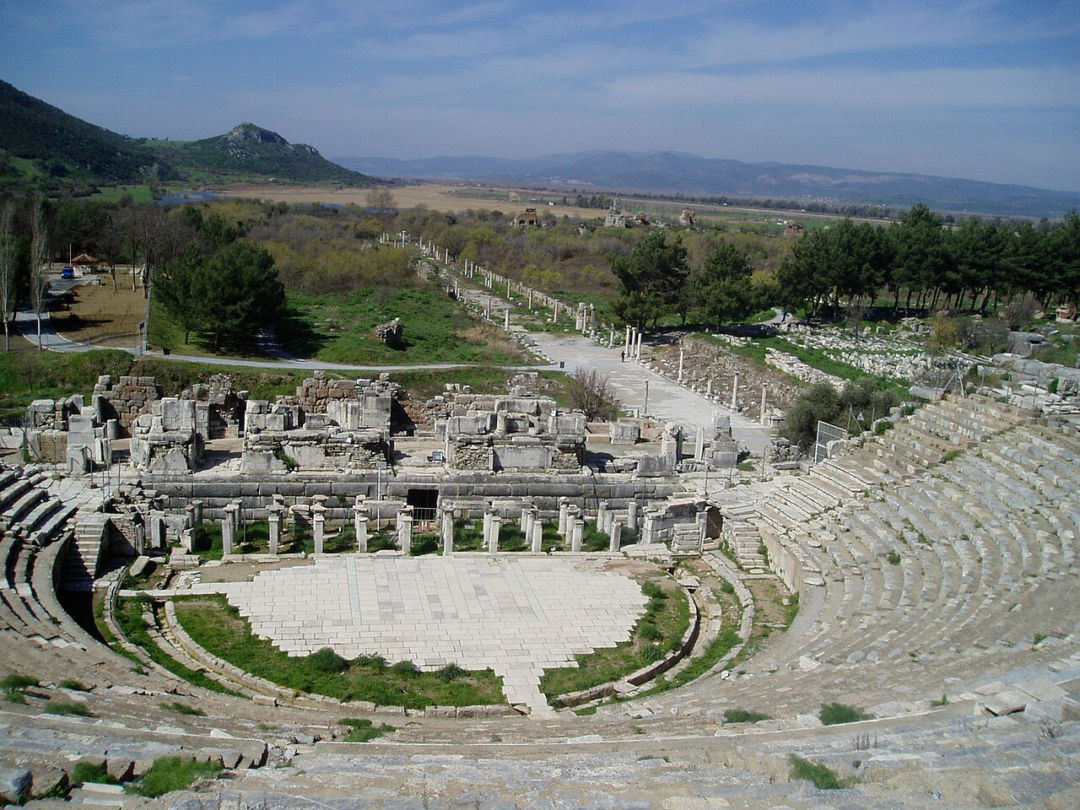
Two perspectives, one from below and the other from above.
From below, during the Roman occupation, if you were in the box seats, you would have heard lectures, plays, watched sporting games and the gore of gladiator events. And as time passed, the harbor receded due to silting, it became marshy, which lead to mosquito infestation which resulted in malaria and finally lead to abandonment.
It is believed that the Gospel of John was written here to counter the worldly influence of Celsus and even more, the comfort of Roman lifestyle.
Bonus – The Marble Streets
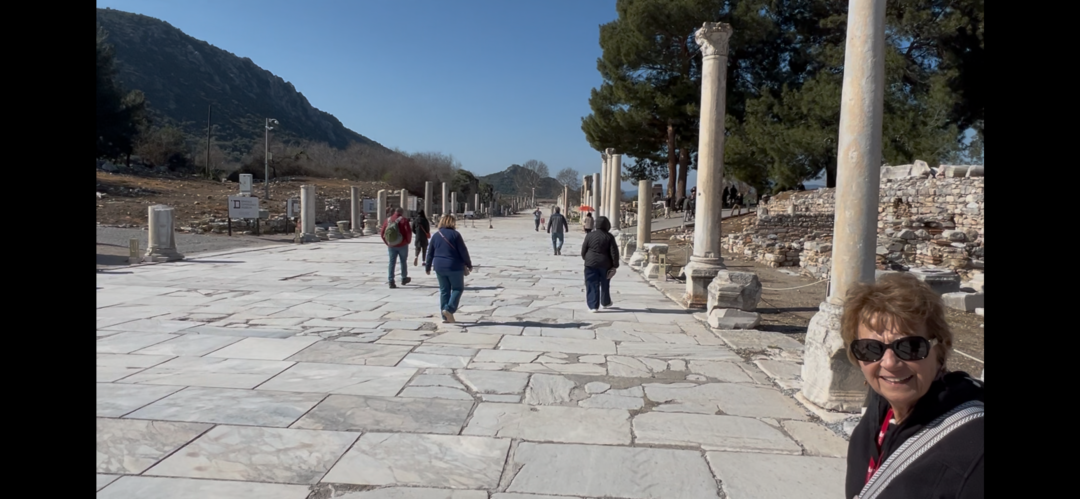 According to our guide, it has rained here every day for the last week. Walking on the wet marble streets are treacherous. She said we were blessed.
More than you can know Nevin! May the God of grace open your heart to more than the knowledge of Jesus but to knowing Him forever.
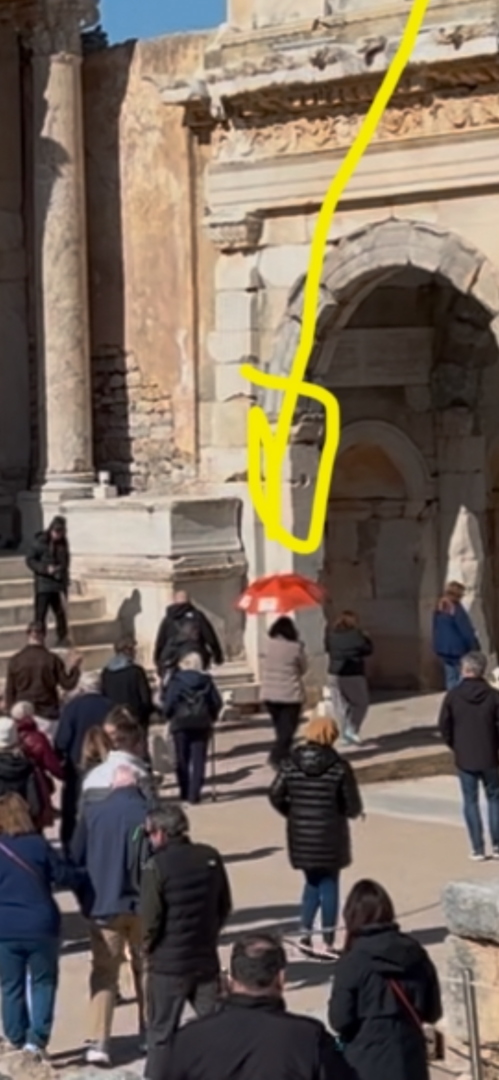
The Streets of Gold
“And the twelve gates were twelve pearls, each of the gates made of a single pearl, and the street of the city was pure gold, like transparent glass.”
Revelation 21:21 ESV
Why Did Celsus Launch His Attack Against Christian Faith, and How Should Believers Respond?